Showing posts with label pfs. Show all posts

Thursday, September 06, 2007

pfs meeting 9/5/07 : querelle
(directed by rainer werner fassbinder)

where to start with querelle? i suppose with its history - the film is about jean genet's novel by the same name (according to fassbinder and instead of being an adaptation or a film based on the book)

also, it was fassbinder's last film - he shot it but died before it was done being edited. for me this seems to actually connect a lot with the picture. it seems to me (and to many pfs'ers) that querelle is mainly a film of excess and extremes. looking beyond the overload of plot, is a set that is candy coated with phallic imagery and decorated by glistening young sailors. visually it isn't possible to make a film more homosexual.

coincidentally at this time, fassbinder himself was full of excess, it would lead to his death by drug overdose and defined his career as during his all too brief time as a director(less than 20 years) he created 44 projects - moving at a somewhat unbelievable pace.

he seems to take all of that and throw it into querelle. an ambitious project, as genet does not seem to be something would easily work on screen, many folks, even fassbinder die-hards, hate the film - vincent canby did in his 1982 review of the film, as he says:

For something that might be called a Fassbinder-Genet jointventure, ''Querelle'' is exceedingly discreet, resolutely unshocking and unprovocative. If it spoke with a single voice - it was apparently shot in English but is being released here with a German sound track - that voice would be a steady drone.

Except for some things that Miss Moreau does, ''Querelle'' is not only humorless but also uncharacteristically witless. The actors aren't called upon to act but to keep a straight face, which may sometimes be difficult for the audience. Mr. Davis, Mr. Nero and Miss Moreau do what they can, but they behave like people abandoned in a foreign country without money or passports.

i wonder though if fassbinder didn't intend this? one thing he always did was to make his intentions known and rather obvious - through performance or visuals fassbinder gave you the clues to figure out what he was getting at. for a film with so much excess to not be provocative or shocking doesn't appear to me to be a failure, but perhaps a choice. i rather doubt that fassbinder would fail at being provocative if that was what he desired.

for me the film works because of the fact that you are seeing and hearing things that don't typically exist in the context of a candy colored world of cinema (normally seen in the 50's) but despite the content you aren't surpised or shocked...instead you actually consider how ideas of sex, homosexuality, love, murder and brotherhood are present in the world today and in your own life - in a film of doubles, it's hard to not try and consider how you exist in fassbinder's world of sailors, even one filled with penis shaped ships and choreographed fight scenes.

on a last note - the film was dedicated to the actor that played "ali" in ali: fear eats the soul -(El Hedi ben Salem M'Barek Mohammed Mustapha) - he was fassbinder's lover and coincidentally committed suicide while in prison in 1982... i am unsure of how this plays into querelle - but it's fassbinder, so i'm sure it does.


Wednesday, August 29, 2007

pfs meeting 8/28/07 : l'eclisse
(directed by michelangleo antonioni)

a late starting, small, but good pfs was had last night.

we got together and watched michelangelo antonioni's l'eclisse

the ending stirred discussion amongst the group, some loving it, some finding it a strange choice. for me, it brought about a sense of the everyday and also of general unease, especially when for a brief moment, a blond woman enters the screen, making us wonder where our protagonists have gone.

jonathan rosenbaum's essay that we wrote for the criterion release of the film highlights the beauty and importance of the ending:

"It’s almost as if Antonioni has extracted the essence of everyday street life that serves as a background throughout the picture, and once we’re presented with this essence in its undiluted form, it suddenly threatens and oppresses us. The implication is that behind every story there’s a place and an absence, a mystery and a profound uncertainty, waiting like a vampire at every moment to emerge and take over, to stop the story dead in its tracks. And if we combine this place and absence, this mystery and uncertainty into a single, irreducible entity, what we have is the modern world itself—the place where all of us live, and which most stories are designed to protect us from."

comparisons between our introduction to monica vitti's vittoria and alain delon's piero were also brought up : vittoria being introduced to us in a quiet scene between soon to be ex-lovers that seems to be missing an intensity, while piero in contrast comes to us in a stock exchange of sorts a - place devoid of real human connection but filled with intensity. likewise the two characters reactions to the death of a drunk who stole piero's car seems to highlight two differing senses of isolation and interaction with the world.

the visual construction of the film is breathtaking - the way in which characters are framed and how surroundings effect where the camera is and who and what we see, tends to define the film over any plot that exists concerning two lovers coming together.

as jonathan rosenbaum also said:

"Only a large screen can do full justice to the virtuosity of Antonioni’s mise en scène; a sense of monumentality is basic to his conception throughout, whether the focal point happens to be a rotating electric fan at dawn, a car with a corpse being hauled from a river, an illuminated streetlamp at dusk, a couple necking on a sofa, or a crowd of screaming speculators. And, again as in
(Tati's)Playtime, even our misrecognition can play a role in overall dynamics: characters with fleeting resemblances to Piero and Vittoria pass through the intersection where their meeting fails to take place, teasing us with possibilities. What Roland Barthes has called Antonioni’s vigilance of desire has become our own, though it remains unsatisfied."

Thursday, August 16, 2007

pfs meeting 8/15/07 : cria cuervos
(directed by carlos saura)

ahhh, i am happy - last night we got together to watch cria cuervos and i fell in love with the film all over again (it was my fourth time seeing it)

overall i think everyone was blown away by ana torrent and how the film was not only a striking portrait of childhood but also managed to show you the world from a child's point of view. saura's use of repeated imagery and movement captured the limited memory of a child and made the symbolism of specific things in the film not distracting and quite manageable.

vincent canby put it best in his 1977 new york times review of the film :
"Childhood can be a most terrifying time. One must constantly observe the proscriptions of a primitive system of cause and effect that can be questioned only by the reckless or the ignorant. Squash a spider and it will rain. Step on a crack, break your mother's back. Sleep in the light of a new moon and you may never wake up. There is power in the knowledge of these things, as well as awful responsibility. One must be vigilant. One has to be alert for signs."

in a film ripe with metaphor, allegory and chicken feet - i am always amazed at how the simple moments are enough for me. for the most part i have never had the desire to really delve into the politics of the film and am still quite happy to just experience it

something else i love about the film was the use of photographs to relay information about the past and to actually represent the past. usually when photographs are used in movies it seems contrived and a little cheesy - but here the images we see add another layer to a tale that revolves around memory and visually help to define the family outside the eyes of our 9 year old protagonist.

interestingly enough there was no commentary with this criterion - but on the supplements dvd, there is a documentary about carlos saura and it begins with saura and a roomful of damaged cameras that he had "rescued", cleaned and rebuilt. watching him with all of the different cameras he had preserved was almost all the commentary on the film i needed....

Wednesday, August 08, 2007

pfs meeting 8/7/07 : dark days
(directed by marc singer)

last night's project film school went very well. thanks to jay and his doc loving ways,
we decided to watch dark days, a film about homeless people living under new york city's penn station. for everyone but daria and i, it was the first time experiencing the film.

the film itself is amazingly
verite, with little to no exposition or explanation from the filmmakers, except to provide us with the names of the characters and a major plot point halfway through that dealt directly with an inability to film.

what really struck me about the film the first time i saw it and even more so this go around, was how it is in many ways a survival film, like most period pieces depicting life on the
american frontier. it challenged conventional notions of what we as people can stand and what we do to survive when we need to.

technically there was much to marvel at as well. it's hard to believe that
dark days was shot on film, in a place with no light and horrific sound - for a film with all of these barriers, it looks and sounds terrific.

everyone seemed in agreement that this was something everyone should see - with all
pfs'ers thinking of who they were going to recommend it to.

i'll leave this pfs entry with jonathan rosenbaum's brief review from the chicago reader, which i think sums the film up pretty nicely and also provides some good background info:

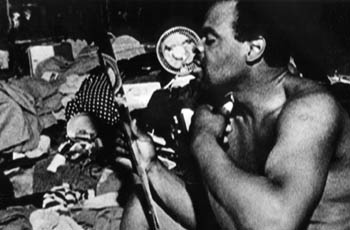
With no prior training in film, 21-year-old Londoner Marc Singer set out to make this 16-millimeter black-and-white documentary (2000) about the homeless people living in the tunnels under New York's Penn Station. Singer's six-year quest--including a brief stint of being homeless himself--deserves notice, and in a way I'm disappointed that the film doesn't go into greater detail about it. But what's most remarkable and fascinating here are the squatters, who do a pretty good job of explaining themselves without any outside narrator (and who, in countless ways, assisted Singer in shooting the film). The lives of these people inside their shacks are full of surprises (one keeps several dogs as pets, another shaves with an electric razor and a broken mirror) as well as grim confirmations (the self-loathing misery of a crackhead who lost her children in a fire), but the things we don't know about them also significantly shape our experience of the film. 84 min.

Thursday, August 02, 2007

pfs meeting 8/1/07 : after the wedding (directed by susanne bier)

douglas
sirk once said that melodrama was simply drama with music - and while i suspect there is a bit more to it, he was certainly on to something...

susanne's bier's after the wedding, the film we ended up watching at project film school this week, opens with shots of india and the sounds of sigur ros. after an introduction to our main character a serious, yet somewhat sad, do-gooder, we shift our eyes to denmark and our ears are suddenly filled with the classic "it's raining men" as a less serious, larger and well to do man drives up to his pictoral estate. both men come with character expectations and sterotypes based on their class and where we meet them - but bier does a great job of twisting and turning our emotions around our expectations until we have nothing left to do but cry....it is interesting to note where the two songs we hear in the opining scenes reappear later in the film.

as a whole the pfs crew enjoyed the film - what was interesting was the very strong opinions all had on character's motivations - i don't think i have ever had a film experience where everyone felt so right in their assessment of the actions of the people we had all come to know while watching the same two hour film. bier's frequent close ups and swirling camera, along with her outstanding cast create a intimate space in which the people we are watching become much more "known" to us - she effortlessly blends the immediacy of her past work in the dogme movement with the tightly woven up and down narrative that defines melodrama - making for a rollar coaster ride of realism you can't get off.

i leave this pfs report with a quote from andrew sarris' review of the film that looks to one point we debated over last night regarding choice of locations:

"...suffice it to say that our opinions of the characters undergo subtle changes, particularly when it involves our ingrown prejudices regarding financiers and seeming humanitarians. The performances of Mr. Lassgård, Mr. Mikkelsen, Ms. Knudsen and Ms. Christensen head up a splendid ensemble, both in Copenhagen and Mumbai. One final hint: The heart of the narrative is much more in Denmark than India, which ends up being exploited for its more colorful production values."

Thursday, July 19, 2007

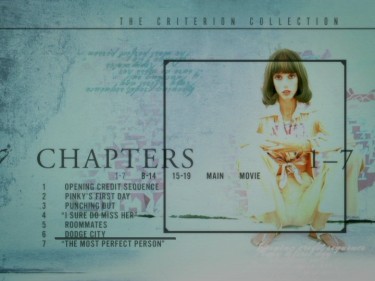
pfs meeting 7/17/07 : 3 women (directed by robert altman)

"the narrative is not only present, it is central to the film's impact. not that altman was hoping a conventional story would somehow emerge from the indefinite notions he had when principal photography began. "i'm trying to reach toward a picture that's totally emotional," he once told a journalist, "not narrative or intellectual, where an audience walks out and they can't say anything about it except what they feel." 3 women doesn't quite match that ambition, but no altman movie comes closer." - david sterritt


this nicely sums up how i felt after watching the movie that robert altman claims to have dreamt up while his wife lay ill in the hospital. watching 3 women was simply put "an experience"and not one that is easily summed up in plot summary or direct criticism.

this film marked the first time in quite some time that a group of us got together to hold an official project film school : and it was interesting to hear the differing opinions on altman's dreamy look at personality theft and women in general.

many i think came up on the side of not buying that this was a serious attempt by altman to explore anything - citing a general annoyance with the characters and an idea that altman had created this film simply to make fun of his audience.

dana expressed a different sentiment towards the film:

"i feel like this movie has to be watched many times to even observe every nuance and detail, which is something we discussed post movie last night. i didn't pick up on the dresses getting caught in the car door...and i am sure there are a whole lot of other reoccurring moments and minute details that require several viewings to notice (let alone conclude to their significance).
there is certainly a kind of kafka-esque factor to the first half, where details are focused on so acutely, but they are details without explanation of why or a purpose. when thinking about the first half, i realized the film really is cut into two halves--and the first half's sterility juxtaposes to the surrealness of the "dream" (and also pinky's other self) that dominates the second half of the movie."

after the film had ended and the pfs troop had gone home, i sat down to listen to the first half of altman's commentary. beyond claiming that the film was indeed inspired from a dream he had that featured shelley duvall and sissy spacek, he claims that most events in the film (like millie's dress getting caught in the car door) i am always somewhat hesitant to believe the director's that claim everything was improvised and happy accidents. espcecially in a film like this where the women have names that are mirrored (millie, willie) and such visual attention is brought to very specific things time and time again.

but who knows - only he i suppose.

"my ideal film would be a painting with music" - robert altman


Friday, June 08, 2007

pfs meeting 6/5/07 : thx 1138 (directed by george lucas)

dystopian future!

generally speaking i try to avoid george lucas and his partner in crime steven spielberg...their films tend to make me angry and for the most part their engagement within the hollywood system always manages to push my buttons. but nonetheless for our last projectfilmschool we sat down to watch the first feature of mr. star wars himself george lucas.

i was suprised to learn during the opening credits of thx 1138 that walter murch not only edited the film, but also co-wrote it. i generally like walter murch and his views on editing. he has a good handle on how we read films emotively - and his presence made me feel better about spending so much times in the hands of george. but i digress..back to thx

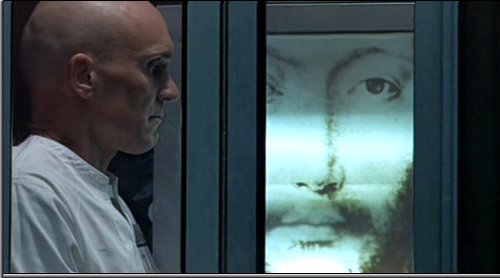
throughout the film and its exploration of a futuristic world where everyone is bald and no one has sex, i kept thinking about how films of "dystopian future" have changed as of late. thx 1138 portrays the future as one of high tech cars, constant big brother presence and a clean and controlled aesthetic. dystopia is portrayed through restrictive visuals and possible technologies taking the place of emotion. while films like this tend to create genuine discussion of possible totalitarian tomorrows, they also tend to distance the audience emotionally.

recent films such as children of men (cuaron) and code 46 (winterbottom) display grim futures but with a sense of reality. gone are the gadgety cars and white walls. instead we have soldiers and much tighter immigration laws. the fear and reasons for the heightened sense of security come from reproduction woes (no children for cuaron's, no procreation for genetic doubles in winterbottom's) - something that has been a topic of debate since roe v wade.

this isn't to say i necessarily prefer children of men to thx 1138 - just that it hits different emotional markers. seeing people that dress like us being locked up and killed and seeing people in military uniforms doing the locking and the killing makes dystopian scenarios seem much more likely. connections to current political situations seem impossible to miss.

the visuals and sound of thx 1138 may provide a disconnect, but they also help to create a true cinematic experience. personal sentiment aside, i will admit that nobody creates a world quite like george lucas - his ability to transform space is something that not many people can touch.

beyond penning the project and cutting it together, murch played a major role in the sound of the picture - and his unique soundtrack helps to make thx a film that resonates. the film may have a touch too much student art film in its blood - but brushes of antonioni and the presence of robert duvall help overshadow the cliches. it's hard not to believe robert duvall when he's on the screen. here he commands your attention and makes a world of white walls, pills and silver faced cops work.

i should add here that i once had the pleasure of interviewing robert duvall and upon parting he shook my hand and wished me good luck - never before was i so positive that good luck was actually headed my way.